
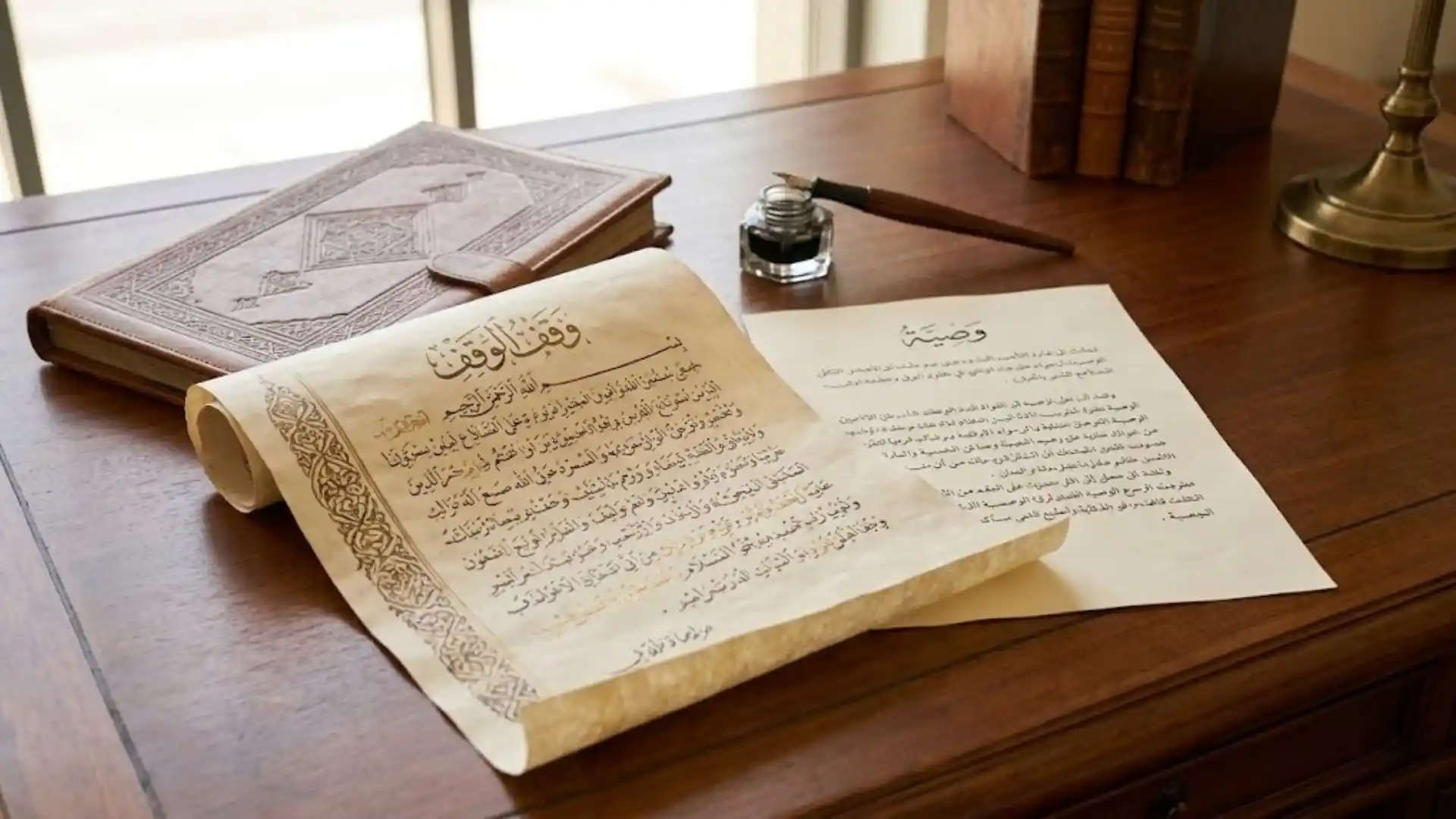
The Fundamental Difference Between Waqf and a Will
Waqf is a permanent, irrevocable disposition, removing the endowed assets from their owner's ownership entirely to become dedicated to the defined purpose forever. A will is a temporary-effect disposition executed only after death, allowing designation of a beneficiary body or person within the permitted one-third limit under Sharia.
Establishing and Documenting Charitable Waqf
We help you establish a charitable waqf dedicating part of your assets to a permanent charitable purpose, such as supporting education or healthcare, and handle documenting the waqf deed in a way ensuring its continued execution according to your original intent across generations.
Family Waqf as an Asset Preservation Tool
We help families establish a family waqf preserving certain assets, such as property or a company stake, within family ownership across generations without dispersal through sale or repeated inheritance distribution.
Drafting a Legally and Sharia-Valid Will
We help you draft a will precisely defining the beneficiary body or person within the permitted one-third limit, accounting for all formal conditions necessary for the will's validity and enforceability after death without potential heir challenges.
Have a similar situation? Reach out on WhatsApp for a quick initial assessment of your legal position.
Wills for Non-Heirs and Charitable Associations
A will is an important tool for donating to a charitable association or a person not entitled to inherit under Sharia, such as a close friend or distant relative, and we help you draft this type of will ensuring the donation actually reaches the intended party.
Appointing the Waqf Supervisor and Their Authorities
We help you appoint a qualified supervisor to manage the waqf after your death, and precisely define their authorities in the waqf deed, ensuring the waqf's continued efficient management achieving its intended purpose without supervisor misconduct.
Updating the Will as Circumstances Change
We advise periodically reviewing the will, especially upon a fundamental change in family or financial circumstances, ensuring the will still reflects your actual wish and doesn't conflict with any change in heir composition or estate size.
Resolving Disputes Over a Waqf's or Will's Validity
When a dispute arises over a waqf's or will's validity, whether from heirs challenging its enforceability or beneficiaries seeking its execution, we represent parties in this dispute based on precise understanding of Sharia and statutory rulings related to these two dispositions.
Charitable Waqf Versus Family Waqf
We clarify to clients the difference between a charitable waqf directed to a general charitable body and a family waqf directed to specific family members, since each type has its own rulings and controls that must be considered when drafting to precisely achieve the intended purpose.
How We Start With You
Send us your goals for establishing a waqf or writing a will on WhatsApp. We help you design the most suitable tool to achieve your wish within permitted Sharia and statutory limits.
Frequently Asked Questions
What's the practical difference between waqf and a will in terms of revocability?
Waqf is a permanent disposition that cannot be reversed after it takes effect, while a will can be amended or revoked as long as its owner is alive.
I want to donate part of my estate to a close friend who isn't a legal heir. Is this possible?
Yes through a will, within the permitted one-third limit under Sharia, and we help you draft it precisely ensuring its enforceability without potential heir challenges.
We want to establish a family waqf preserving a certain property within family ownership across generations. How do we start?
We help you draft a waqf deed precisely defining the purpose, beneficiaries, and management mechanism, ensuring this goal's continuity across generations.
Who manages the waqf after my death, and how do I ensure good management?
We help you appoint a qualified supervisor and precisely define their authorities in the waqf deed, with oversight mechanisms limiting any potential misconduct.
I wrote my will years ago and my family circumstances have changed since then. Should it be updated?
We recommend periodic will review, especially upon a fundamental circumstance change, ensuring it still reflects your actual wish.
One of the heirs is challenging my father's will's validity. How do we handle this dispute?
We review the will's drafting circumstances and its compliance with necessary formal conditions, and represent you in defending its enforceability or challenging it based on your position in the dispute.
I want to establish a waqf benefiting specifically my children and grandchildren rather than a general charity. Is this possible?
Yes, this is a family waqf with its own rulings, and we help you draft it precisely to achieve this specific family purpose.